
You download three language apps during your January commute. You finish the introductory lessons, turn on reminders, and start imagining conversations on your next trip. By March, you're dismissing the notifications without opening any of them.
The problem isn't necessarily motivation. You chose a screen-heavy course for time spent driving, a vocabulary game for a speaking goal, or an open-ended content library when you needed someone to tell you what to study next. The best language learning apps fit your schedule, your goal, and the way you already use your devices.
Popularity isn't proof of learning, either. A Frontiers in Education study of mobile language learners found increased self-efficacy after a month of AI-supported learning, while acknowledging that rigorous research on language-learning apps remains limited. Feeling more confident matters, but it's not the same as understanding an unfamiliar speaker or remembering vocabulary later.
Choose the activity you need to practice, not the app whose progress screen you like most.
For a student, that might mean structured grammar lessons followed by audio review of course notes. For a commuter, it means downloadable listening that doesn't require constant tapping. Someone starting Japanese needs script instruction; someone preparing for a job interview needs a person who'll ask unexpected follow-up questions.
The recommendations below weigh cost model, device fit, language coverage, offline access, and practical limitations. Exact subscription offers change, so compare the checkout terms for your language and device rather than assuming an advertised monthly equivalent means monthly billing.
Start with a primary learning tool. Add a text-to-speech reader for reviewing material you already understand, not for generating an endless queue of difficult listening. The right combination should make practice easier to repeat, not give you more apps to manage.
Table of Contents
- 1. Duolingo
- 2. Babbel
- 3. Busuu
- 4. Pimsleur
- 5. Rosetta Stone
- 6. Memrise
- 7. LingQ
- 8. LingoDeer
- 9. Mango Languages
- 10. italki
- How the ten apps compare on free access, offline use, and best fit
- Building a Weekly Routine That Fits Your Life
1. Duolingo
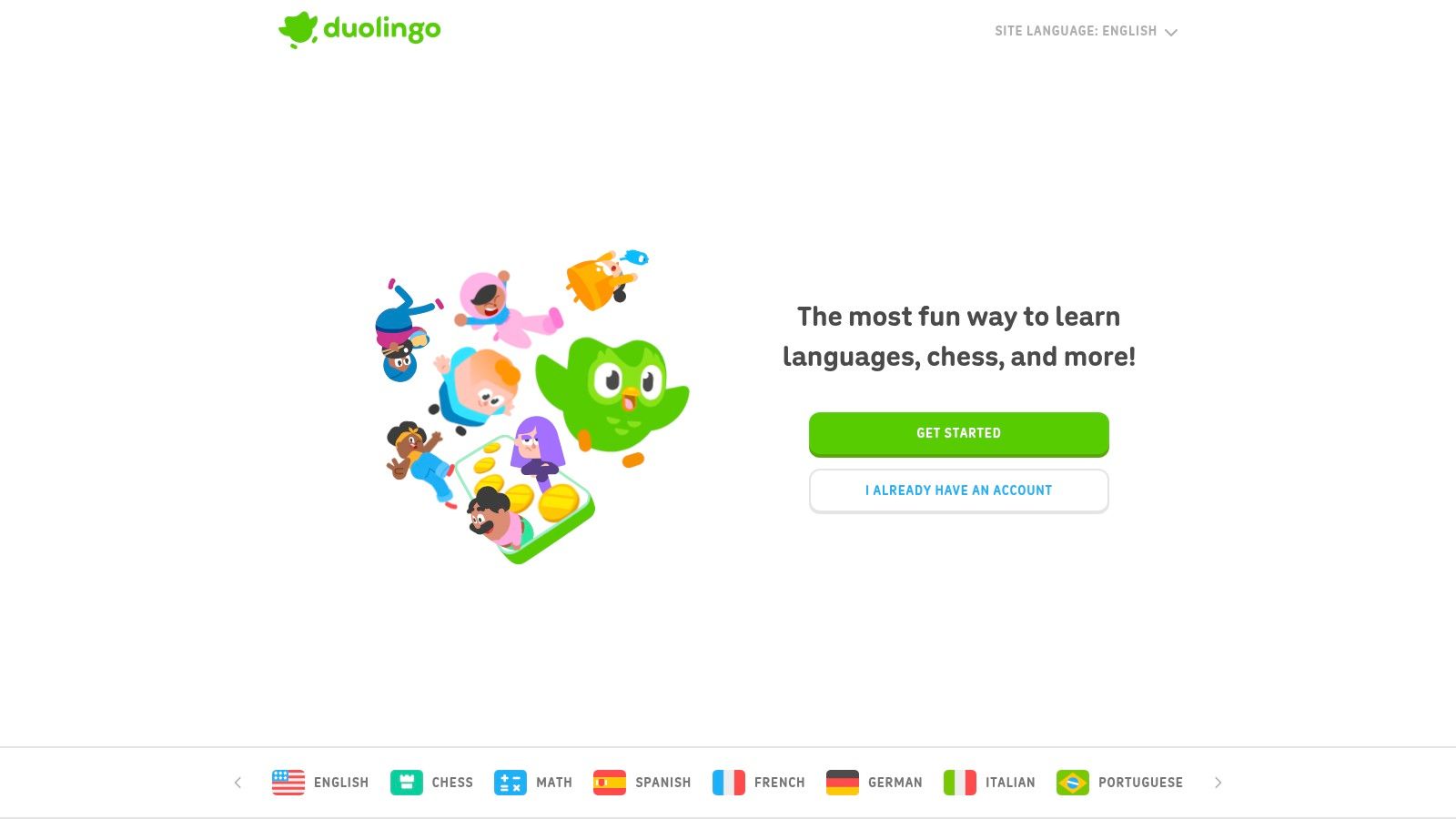

Best for beginners who need a daily starting point. Duolingo makes it easy to begin an exercise without planning a study session. Short tasks, immediate feedback, and visible streaks suit spare moments when opening a textbook would feel unrealistic.
Its scale illustrates the appeal of that format. Duolingo reported 40.5 million daily active users for the quarter ended December 31, 2024, in its quarterly shareholder filing. That's evidence of frequent use, not evidence that every regular user develops conversational proficiency.
Free course access is its strongest practical advantage. Paid Super plans remove advertising and add conveniences, but paying doesn't change the need to practice outside short exercises.
Turn recognition into recall
Duolingo works well when you need a prompt to start. It's less convincing as your entire language-learning routine, particularly if your goal involves sustained conversation or understanding speech without written choices.
- Keep the lesson purposeful. After an exercise, say a related sentence about your own life without looking at the screen.
- Save complete phrases. Put useful expressions into a personal review document instead of collecting isolated translations.
- Add audio afterward. Use a text-to-speech reader to replay those phrases when you're away from the app.
Course depth and features differ by language. Check the actual course you'll use rather than assuming every language receives the same treatment.
Choose Duolingo if starting consistently is your main obstacle. Choose Babbel or LingoDeer if you want more explicit explanations, and add human conversation when answering exercises starts feeling easier than expressing your own ideas. A streak can support your routine, but it shouldn't become the thing you're studying for.
2. Babbel
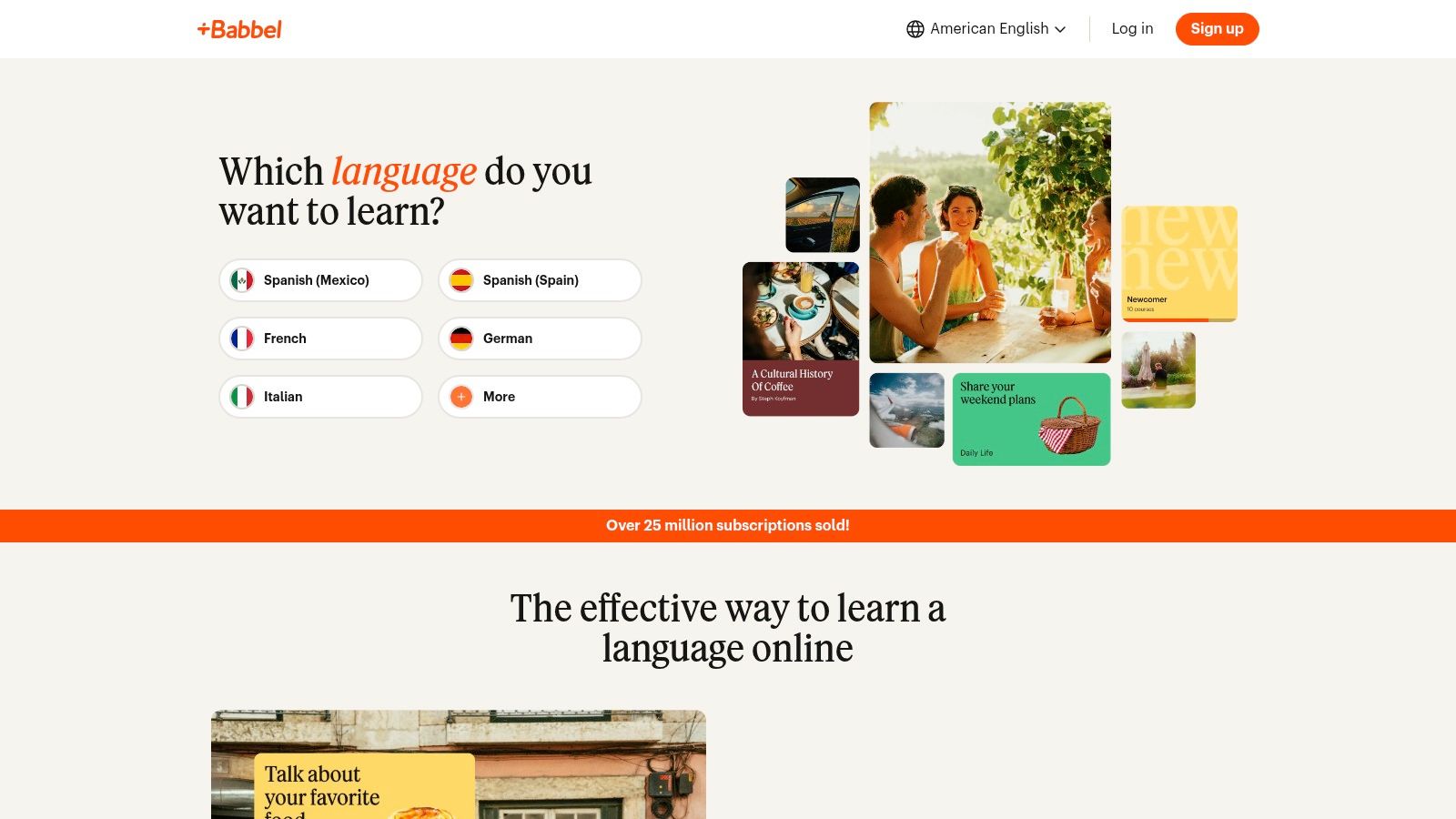

If you keep asking why a sentence works, Babbel is a better fit than an app that expects you to infer every rule through repetition. Babbel combines sequenced lessons with grammar explanations, vocabulary review, and everyday communication practice.
The structure suits adult beginners and students who want a clear next step. Instead of deciding which video or word list to study, you follow the course and revisit material through review activities.
Full access requires payment, and the language catalog is narrower than those of broad-coverage competitors. Check that your target language is available from your starting language before considering a subscription.
A course for deliberate study
Babbel's strength is explaining and organizing material. Its limitation is that working through a dialogue doesn't require the same decisions as talking to someone who changes the subject.
A useful daily workflow starts with a focused lesson so you can read and listen carefully. Write down the rule in your own words, then create example sentences that use vocabulary you need.
- Before travel. Download available lessons and test access without a connection.
- During review. Read your example sentences aloud before checking the app's audio.
- Away from the screen. Convert your corrected notes into speech and listen for the grammar pattern you studied.
Don't turn an entire page of English explanations into target-language audio review. Separate explanations from examples so you can listen to the language itself without constant switching.
Babbel is a sensible primary course if you prefer clarity over points and rewards. Pay for the structure you'll use, not the expectation that finishing the course will automatically make conversation comfortable. Pair it with a tutor, exchange partner, or other opportunity to respond without a script.
3. Busuu
Best for learners who want a course and feedback on their output. Busuu combines level-based lessons with opportunities to submit exercises for community corrections. That makes it a useful middle ground between studying alone and scheduling live lessons.
The important distinction is what happens after you produce a sentence. Rather than only selecting a predetermined answer, you can get comments on something you've written or said.
Free access lets you explore the approach. Paid plans add tools such as offline access and additional practice features, although availability differs across languages and plans.
- Main strength. You get a guided learning path alongside opportunities to notice errors in your own output.
- Main limitation. Community corrections vary in quality, detail, and usefulness.
- Best audience. Students and independent learners who'll revise their work instead of just collecting completed lessons.
Make corrections reusable
A correction only becomes useful when you understand what changed. If someone rewrites your sentence without explaining it, compare the versions and identify the specific difference before saving it.
Say you're practicing how to describe your workday. Complete the relevant lesson, submit a short description, and revise it after feedback arrives. Then read the corrected version aloud without copying its rhythm mechanically.
For audio review, put the final sentences into a text-to-speech reader. Keep your original mistakes in a separate document so you don't accidentally rehearse them.
Busuu won't guarantee that every submission receives teacher-quality guidance. Treat unclear community feedback as something to verify, particularly when corrections conflict.
Choose it over Duolingo if you want a stronger connection between coursework and personal expression. Choose it over italki if you're not ready to commit to scheduled calls, while recognizing that asynchronous corrections don't reproduce the pressure or flexibility of live conversation.
4. Pimsleur
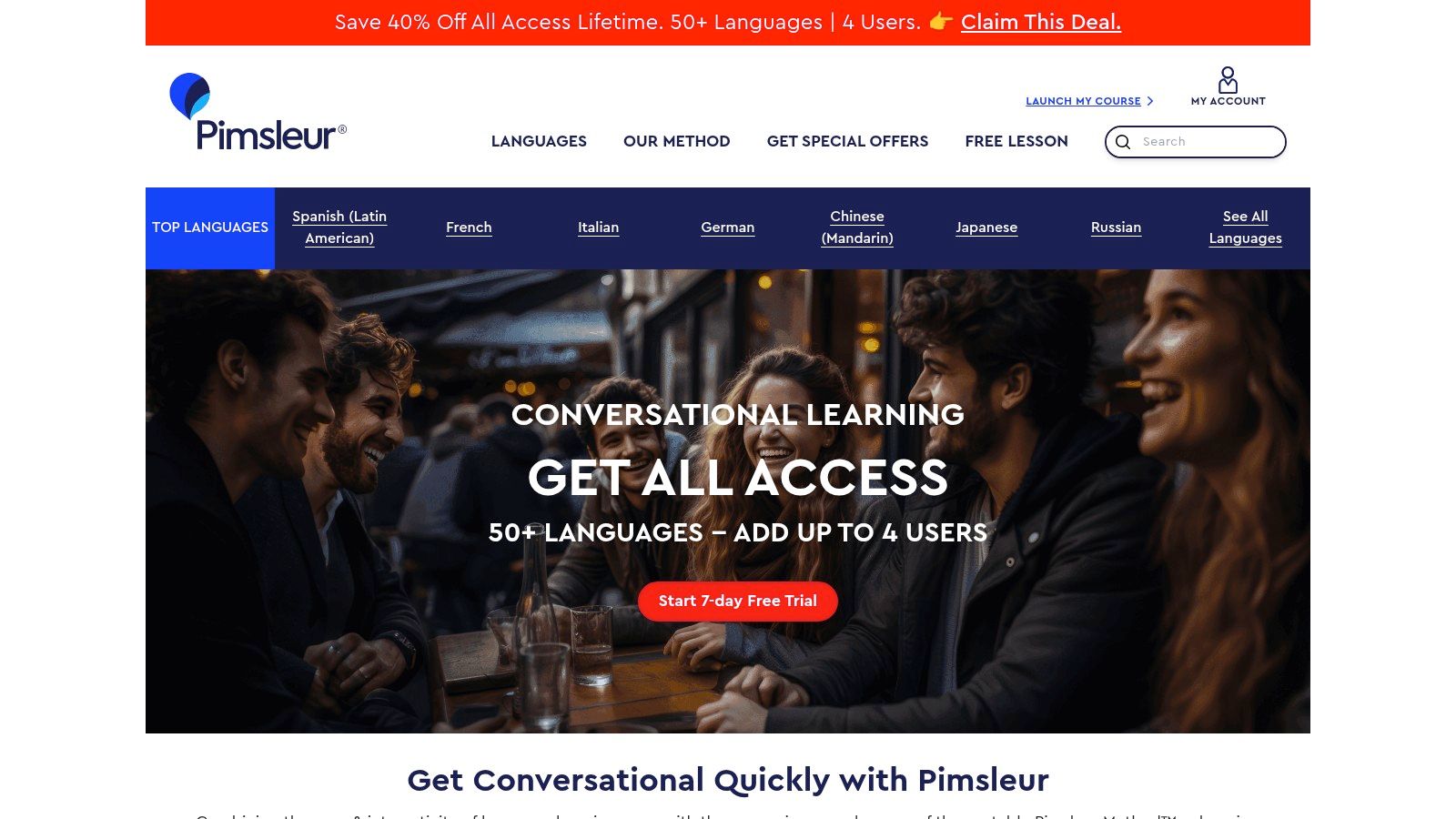

Your commute is useful study time only if the app works without your eyes. Pimsleur is the strongest fit here for guided, audio-first practice, particularly when you can safely answer spoken prompts aloud.
The lessons ask you to listen, recall, and respond. That's a different activity from letting a foreign-language podcast play while your attention stays elsewhere.
Downloadable lessons support offline use, and hands-free playback suits chores or travel. The trade-off is a recurring lesson format that can feel repetitive, with less emphasis on reading and writing than a screen-based course.
Practical rule: If you never answer the prompts, you're skipping the part that makes Pimsleur different from background audio.
Match the lesson to the journey
Use a new lesson during a walk or household task where speaking aloud feels comfortable. On crowded public transport, review familiar material instead of expecting yourself to give full spoken responses.
Keep driving safety separate from study ambition. Set up playback before moving, and don't interact with the screen or force responses when traffic needs your attention.
- For the main session. Follow the spoken prompts and attempt an answer before hearing the model.
- For later review. Write down useful expressions when you're stationary, then confirm their spelling.
- For extra listening. Turn those checked expressions into a short text-to-speech review document.
The additional audio should reinforce the course, not replace its original recordings. Keep returning to the speaker models for pronunciation and phrasing.
Pimsleur's subscription may be harder to justify if you mainly want written grammar explanations or reading practice. Choose it because you have genuine audio time available, then add a reading resource so the language doesn't remain something you can hear but struggle to recognize on a page.
5. Rosetta Stone
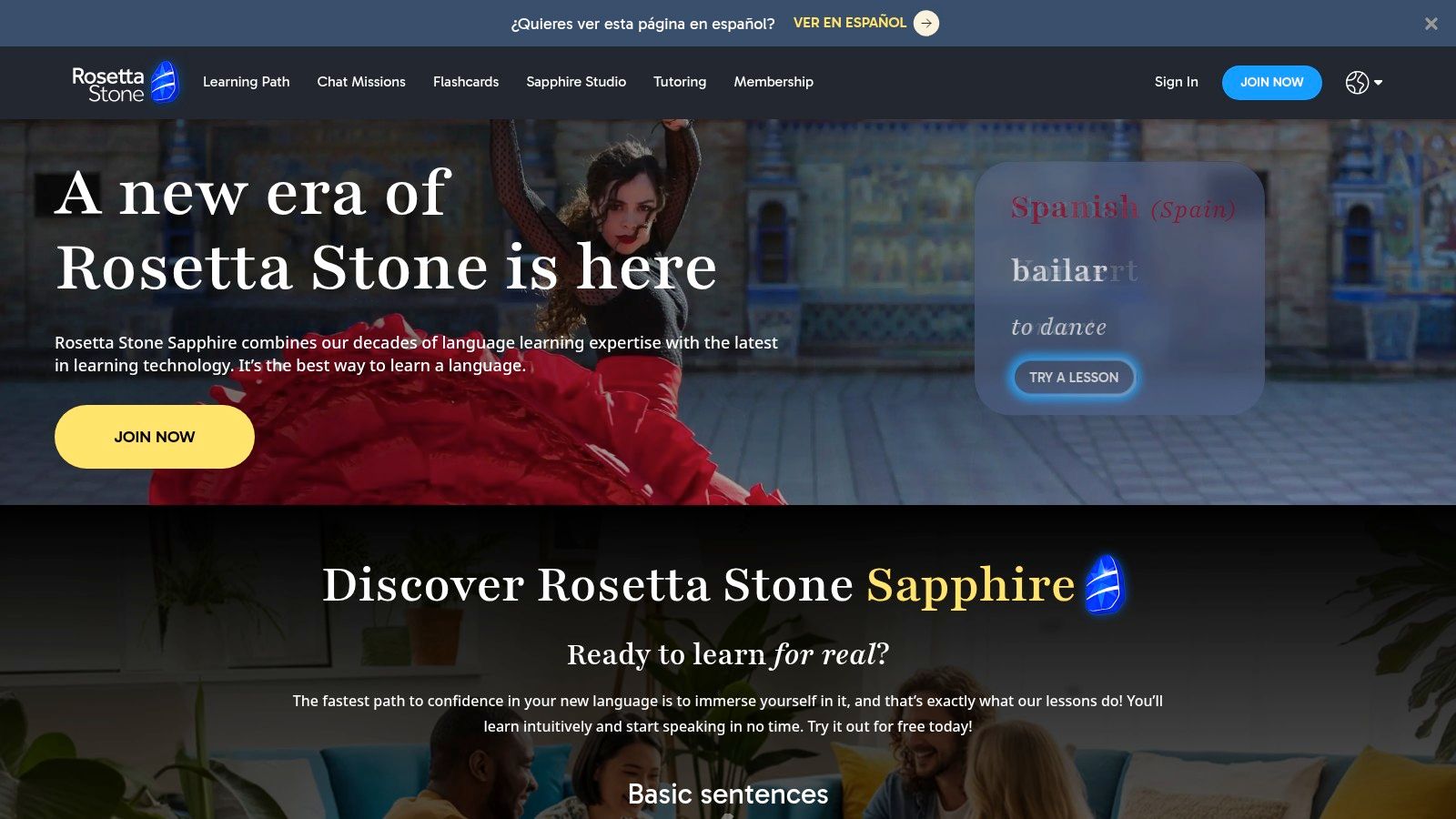

Rosetta Stone suits learners who enjoy working out meaning from images and spoken context. Rosetta Stone uses an immersion-style approach rather than making English translation the center of every exercise.
That can be appealing if you keep translating each word before understanding a sentence. Its consistent lesson style and frequent pronunciation work also provide a predictable practice routine.
The same method can frustrate learners who want direct explanations. If you're unsure whether a change in wording indicates tense, number, or another distinction, repeating the image exercise may not resolve the question.
Use context without accepting confusion
The pronunciation tool, TruAccent, gives you a reason to speak rather than just tap. Treat its feedback as a practice signal, not a complete assessment of whether another person will understand you.
A productive session combines image-based work with a brief clarification afterward. Finish the lesson, identify any unresolved pattern, and consult a grammar reference rather than guessing indefinitely.
- Works well for. Beginners who prefer visual context and a consistent exercise format.
- Works less well for. Learners who need explicit rules before they feel comfortable proceeding.
- Purchase caution. Compare the billing period and upfront commitment, not just the displayed monthly equivalent.
For daily audio review, write a simple description of objects or actions around you using the lesson's patterns. Check the sentences, then listen through a text-to-speech reader without looking at the descriptions.
Don't spend the review session memorizing which photograph matches which recording. Change the subject or object so you have to understand the sentence pattern.
Choose Rosetta Stone for its method, not its familiarity as a brand. If the first lessons leave you curious and engaged, it may fit. If they leave you irritated by unanswered grammar questions, Babbel or LingoDeer is likely a more comfortable starting point.
6. Memrise
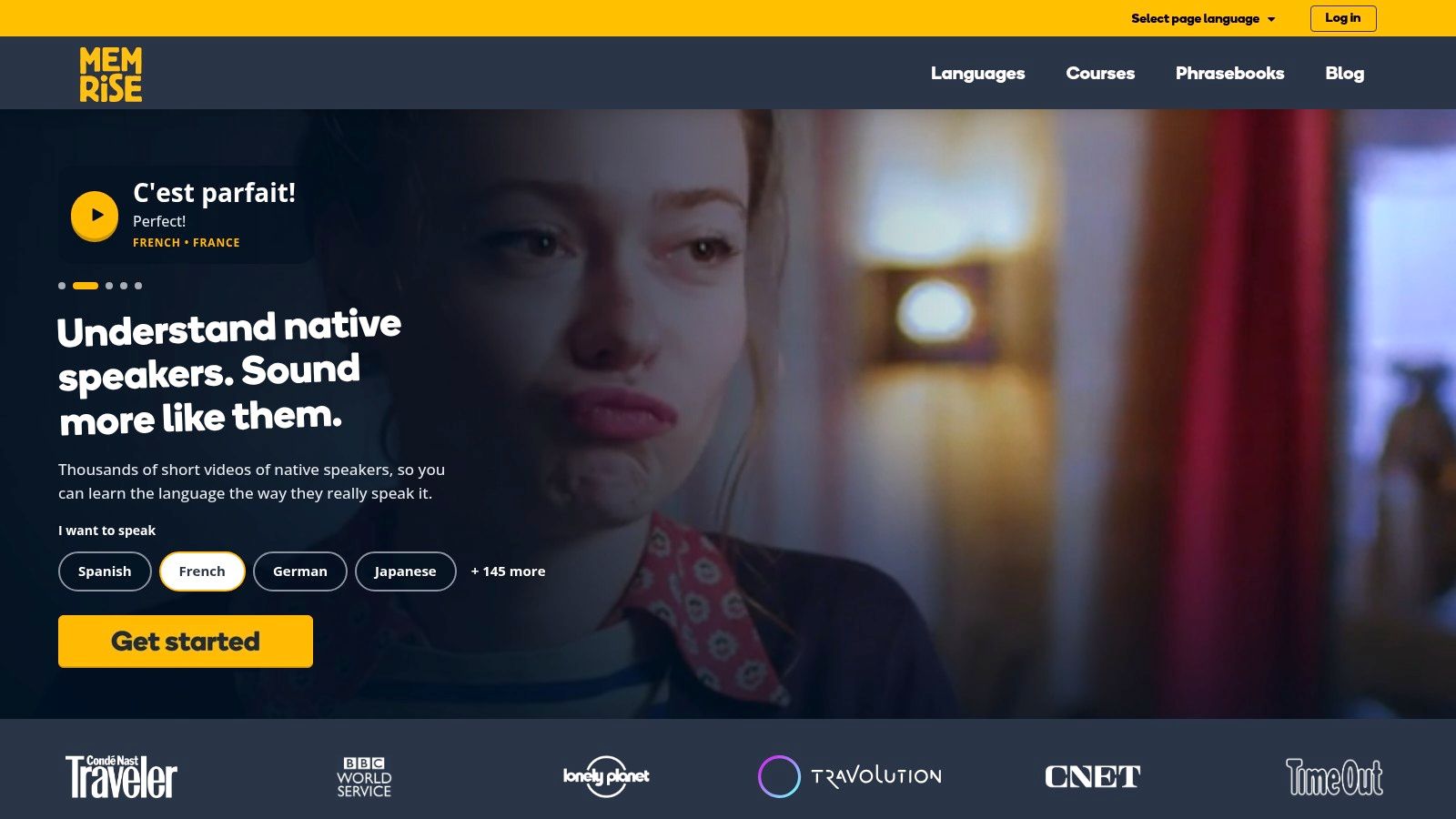

Knowing a word in a lesson doesn't mean you'll recognize it when someone says it casually. Memrise is useful for learners who need more exposure to real voices, accents, and everyday phrasing.
Its short speaker videos give vocabulary a spoken context. Structured activities and review help you revisit material, while AI conversation practice offers another place to attempt responses where available.
Free starting access makes it possible to assess the format before paying. However, features and depth vary by language and account, so inspect your actual course rather than choosing from a general feature list.
Listen for more than the word
Use a clip to notice how someone connects words, stresses a phrase, or changes pace. Replay it before reading the text, then compare what you thought you heard with the actual wording.
A practical daily sequence is to study a phrase, imitate the original speaker, and use the phrase in a sentence about your own situation. That final step separates recognition from usable vocabulary.
- Save the context. Keep a complete sentence rather than a bare word and translation.
- Use synthetic audio selectively. Narrate your checked example sentence for later review.
- Return to the recording. Compare your practice with the original human voice rather than relying entirely on synthesized speech.
Memrise isn't a replacement for a teacher who can explain why your sentence sounds unnatural. AI practice and short videos also won't necessarily give you the depth of feedback needed for a presentation or examination.
Older community-course content is separate from the main experience, which can matter if you're following an existing study recommendation. Choose Memrise as a listening and vocabulary companion, especially when your main course feels too controlled, rather than expecting every feature to form a complete curriculum.
7. LingQ
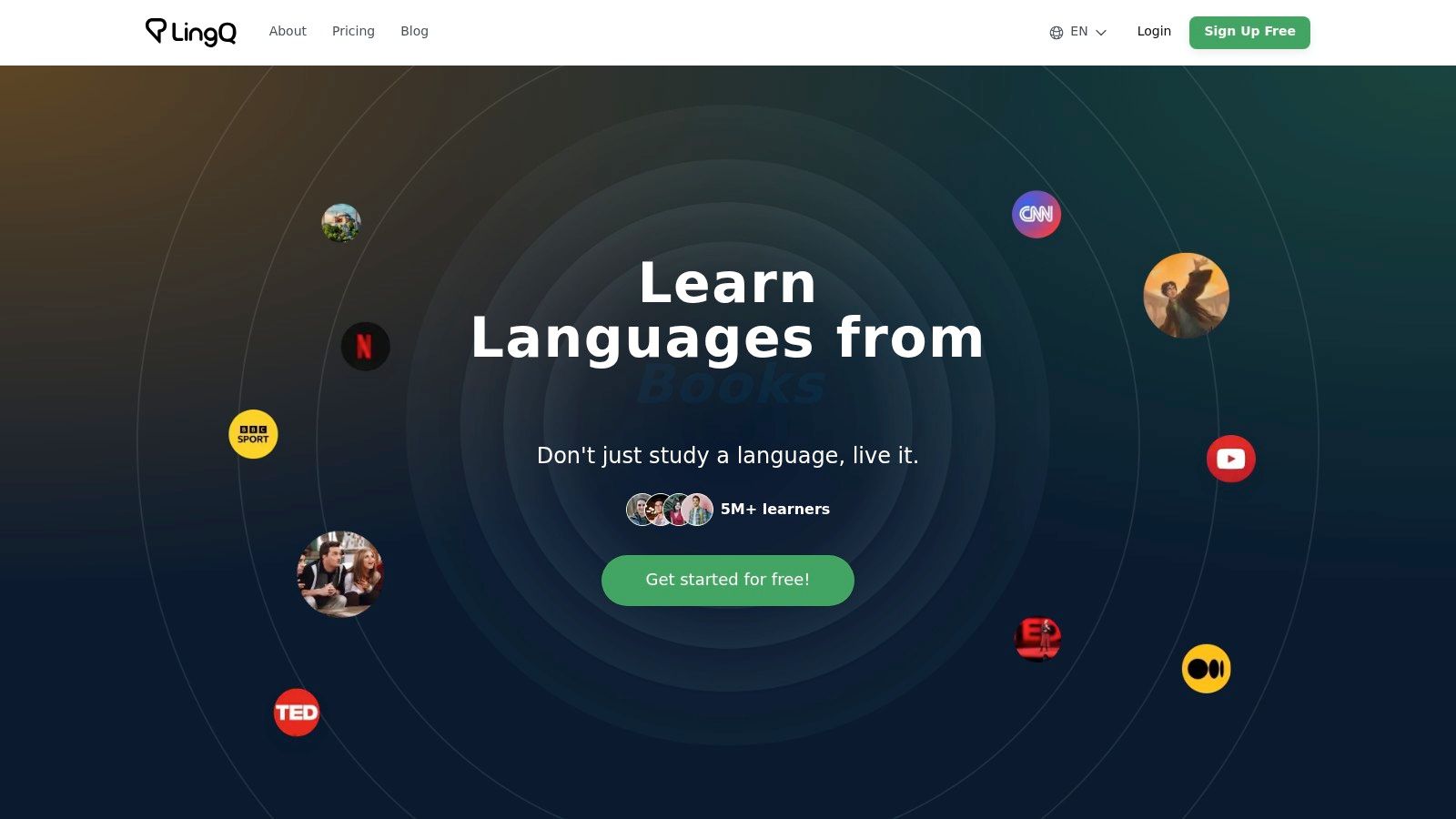

Best for readers who want to study material they care about. LingQ brings reading, listening, vocabulary lookup, and saved-word review into a content-centered workspace.
You can use its lesson library or import personal material. For a researcher, that could mean an accessible article related to their subject; for a general reader, a story or podcast transcript they'd willingly revisit.
The advantage is relevance. The limitation is responsibility: you must choose suitable content, manage imports, and decide what deserves review.
Interesting material is useful only when you can understand enough of it to stay interested.
Build a manageable reading-and-listening loop
Start with a short passage that mostly makes sense. Read it in LingQ, look up the words that block comprehension, and save useful expressions rather than every unfamiliar item.
Then listen to the passage while following the text. Later, try listening without reading and summarize the main idea aloud.
- For students. Choose material related to your course, but avoid starting with your densest technical paper.
- For independent readers. Follow a topic across several texts so useful vocabulary reappears naturally.
- For audio review. Use an existing recording when available, or narrate a permitted text through a text-to-speech reader.
Check your rights before importing or uploading copyrighted or confidential material. Personal interest doesn't remove restrictions attached to a document.
LingQ is less guided than Babbel or Busuu, and free-tier limits can constrain regular use. It also doesn't solve speaking feedback on its own.
Choose LingQ when your main problem is moving beyond course exercises into sustained content. Motivated beginners can use it, but learners who need a clear sequence may prefer a structured course alongside it. Don't confuse time spent organizing vocabulary with time spent understanding language.
8. LingoDeer


Starting Japanese, Korean, or Chinese involves more than memorizing translated phrases. You also need to connect unfamiliar written forms with sounds and sentence structure. LingoDeer is a strong starting choice for learners who want those foundations explained.
Its structured lessons, grammar notes, and script practice suit beginners who don't want to infer everything from repeated exercises. Web and mobile syncing also helps if you prefer studying explanations on a larger screen and reviewing on your phone.
Selected material is free to try. Full courses and additional functions require Premium, and the catalog is narrower than those of broader language platforms.
Don't let audio replace script practice
A pronunciation you can imitate isn't automatically a word you can read. Keep script recognition as a separate part of the routine, even when audio review feels easier.
Start with the lesson's writing-system work, then study the grammar explanation and complete the exercises. Afterward, cover the pronunciation aid and try reading the target script directly.
- Check recognition. Can you identify the written form without depending on its position in an exercise?
- Check production. Can you build a new sentence using the pattern rather than repeat the model?
- Check listening. Can you understand a familiar sentence without seeing the script?
For text-to-speech review, use checked sentences in the target writing system. Listen while reading first, then listen without the text; avoid feeding ambiguous romanized notes into the reader and assuming the result is authoritative.
Choose LingoDeer over a broader app when script and grammar foundations are your priority. Add human-speaker recordings and conversation as you progress. A carefully sequenced beginner course is useful, but it shouldn't become a reason to postpone using the language outside lessons.
9. Mango Languages
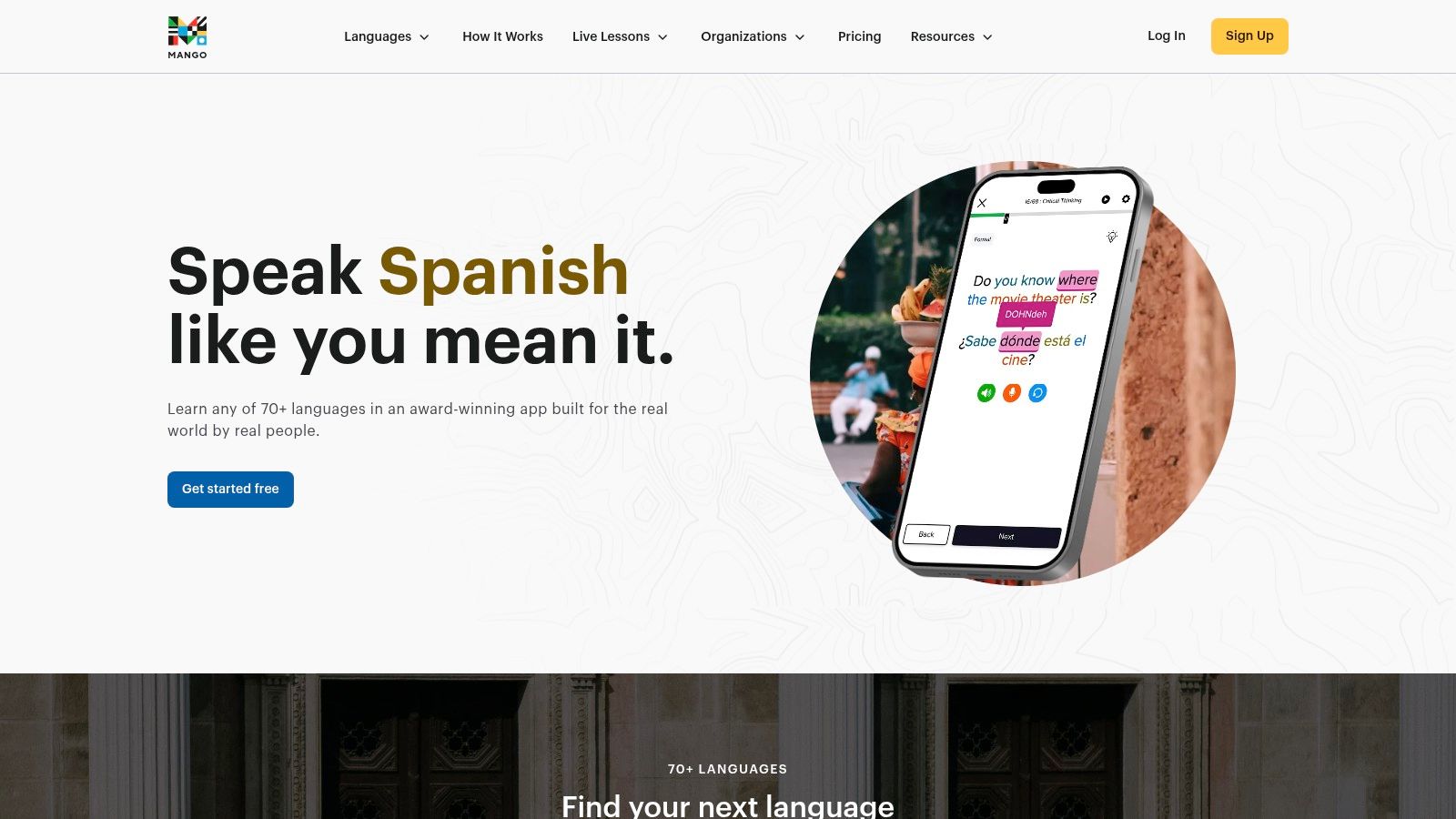

Before paying for another subscription, check your library account. Mango Languages may be available at no additional cost through a participating library, school, or other organization.
That makes it particularly relevant to students and budget-conscious learners. Its conversational lessons and cultural notes give you a guided introduction without requiring you to assemble a course from unrelated resources.
Institutional access isn't universal. Confirm eligibility and the available course before assuming your library card includes it.
- Best reason to choose it. You have participating institutional access and want guided conversational material.
- Useful distinction. Cultural notes provide context alongside the language rather than presenting phrases as interchangeable translations.
- Main limitation. Course depth differs by language, and live conversation isn't its central offering.
Practice the situation, not just the dialogue
Use a lesson to prepare for a specific interaction, such as introducing yourself or asking for directions. After studying the model, change the details so the exchange applies to you.
Write a brief personal version of the conversation. Verify uncertain wording before turning it into text-to-speech audio, then pause between lines and supply your response aloud.
For later listening, separate the prompt from the answer. If you always hear both immediately, it's easy to mistake familiarity with the exchange for the ability to respond independently.
Mango works well as an accessible starting resource, particularly when institutional access removes the pressure to justify another subscription. It's less suitable as your only tool for a specialist goal, such as academic writing or a technical interview.
If your chosen course runs out of depth, keep the useful foundation and move into relevant reading, listening, or tutoring. You don't need to finish every available activity before seeking material closer to your real-life needs.
10. italki
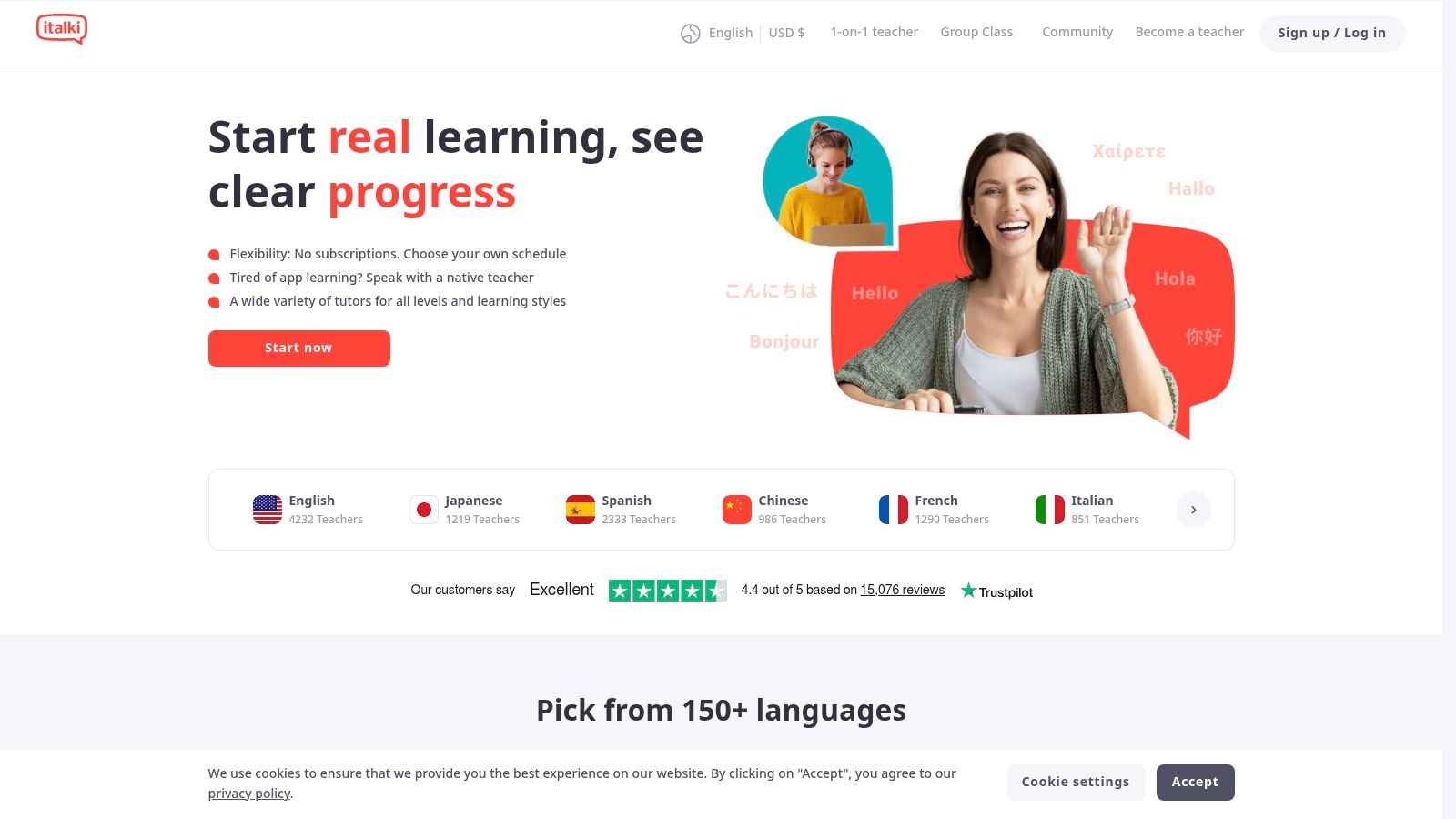

For conversation seekers, italki addresses the limitation most self-study apps leave unresolved: another person needs an answer now. italki connects learners with individual teachers and tutors for video lessons.
Teachers set their own rates, schedules, and lesson approaches. You generally pay for lessons or packages rather than following a single standardized app curriculum.
That flexibility is useful for interview preparation, pronunciation work, or conversations related to your studies. It also means you must select a teacher carefully and explain what you want to practice.
Give the teacher a concrete task
A request to improve speaking is broad. A request to practice explaining your research to a non-specialist gives the teacher something useful to work with.
Before the lesson, prepare a short topic outline and identify where you get stuck. During the call, ask for corrections that distinguish mistakes affecting meaning from smaller refinements.
- For beginners. Request guided questions, visual support, and clear explanations rather than unsupported free conversation.
- For professionals. Bring a realistic scenario, such as summarizing a report or responding to a customer.
- For review. Save teacher-corrected sentences and turn them into an audio practice document.
Don't record lessons without permission. Written corrections are enough to create a personal review routine without introducing recording or privacy concerns.
Teacher quality and teaching style vary. A friendly conversation can be valuable, but it isn't automatically a well-planned lesson; look for someone whose correction style and preparation match your needs.
Choose italki when speaking is the skill you keep postponing. Pair it with Babbel, Busuu, LingQ, or another independent study tool so you arrive with something to say and leave with specific material to practice.
How the ten apps compare on free access, offline use, and best fit
| App | Free access | Offline use | Best for |
|---|---|---|---|
| Duolingo | Free courses | Downloads require a paid plan | Short, game-like daily practice |
| Babbel | Full access requires payment | Offline lessons available | Structured lessons and practical communication |
| Busuu | Free access available | Available with Premium | Structured courses with community feedback |
| Pimsleur | Paid subscription service | Downloadable lessons for offline playback | Audio-first speaking practice on the go |
| Rosetta Stone | Subscription required | Downloadable lessons | Immersion-style learning and pronunciation practice |
| Memrise | Free starting access | Downloads require a paid plan | Vocabulary and natural-speech listening practice |
| LingQ | Limited free tier | Downloaded lessons play offline | Reading and listening with authentic content |
| LingoDeer | Selected material is free | Downloadable lessons | Beginners learning Japanese, Korean, or Chinese |
| Mango Languages | Free through some participating institutions | Downloadable lessons | Conversational courses with cultural context |
| italki | Free learner community; lessons are paid | Not applicable; lessons are live | One-on-one lessons with a teacher or tutor |
Where offline access is thin, TTS Pro can read saved notes and articles aloud on iOS and Android.
Building a Weekly Routine That Fits Your Life
The best language learning apps don't all need a place on your phone. Choose a primary tool for learning new material, then add a complementary activity that addresses its clearest limitation. A course plus listening review is useful; several overlapping beginner courses usually create more decisions than practice.
Students should pair a structured course with a review tool. Babbel suits learners who want explanations, while Busuu adds opportunities for feedback on submitted work. Keep a document of corrected examples from lessons and classes, then use audio review to revisit them away from your desk.
Match the pairing to the learner
- Commuters. Use Pimsleur for guided listening and spoken responses when safe, then review familiar material during travel.
- Beginners of non-Latin scripts. Use LingoDeer for written foundations and grammar, with audio as reinforcement rather than a substitute for reading.
- Conversation seekers. Combine italki with independent study so lessons focus on meaningful interaction, not only introducing vocabulary.
- Intermediate readers. Use LingQ for relevant content and Memrise for exposure to human voices and everyday phrasing.
A workable day starts with your course app's drills while you can give them your attention. Next, write a short review document containing corrected sentences, useful phrases, and a simple summary of what you learned. Listen to that document later, then try saying the main ideas without the recording.
With our TTS Reader Pro app, you can convert study notes, PDF or EPUB chapters, and web pages into speech. We offer voice choices, adjustable listening speeds, and pronunciation adjustments in the settings. Start slowly enough to follow the meaning, then return toward a comfortable natural pace instead of treating faster playback as an achievement.
Use pronunciation settings to correct how the reader handles a name or recurring term. They don't assess your own pronunciation or establish that a sentence is grammatically correct. Check the text before rehearsing it, especially if it contains your own translations.
Keep human audio and accessibility in the routine
Our voices are AI-generated, not human narrators. Use them for flexible review, but retain human-speaker audio from resources such as Memrise or Pimsleur for phrasing, accent variation, and conversational delivery. Listening repeatedly to the same synthetic version shouldn't be your only exposure to a language.
Accessibility also requires more than an audio playback button. A review of digital tools and language learning in the ICAIIT proceedings.pdf) discusses digital-tool adoption alongside concerns about relying on AI without teacher involvement; enthusiasm alone doesn't establish that a tool meets an individual learner's needs.
We haven't yet stated which accessibility features our app supports. Before relying on it, verify compatibility with your required screen reader, text display, navigation method, and playback controls. Test an actual study document rather than assuming that support for audio means every part of the app will be accessible.
Measure progress through something outside the app: explain a familiar topic, understand an unfamiliar recording, or recall phrases without seeing the answers. Keep the routine small enough to repeat, and choose one app for the next 30 days and set a fixed daily time.
TTS Pro turns notes, articles, PDFs, EPUBs, and other text into speech, with AI voice choices and adjustable playback speeds. Visit TTS Pro to try turning a corrected language-study document into listening practice for your commute or daily review.


No Comments
Leave a comment Cancel